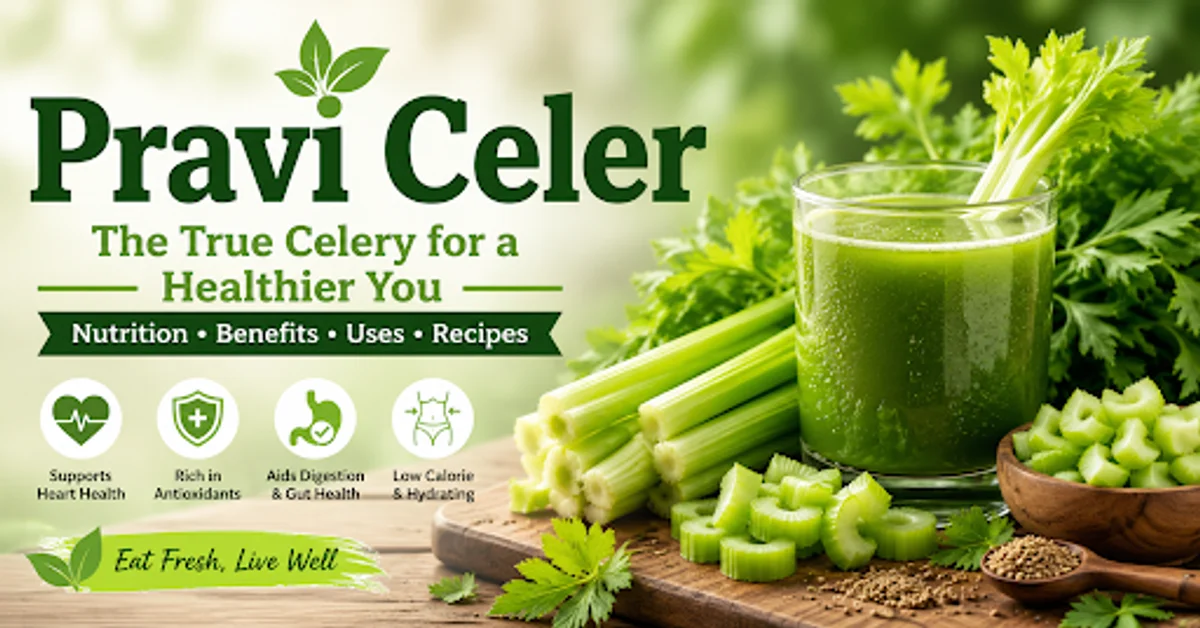
Pravi Celer: Complete Guide to Celery Benefits
Pravi celer is a South Slavic term that means “true celery” or simply the common edible celery plant used in cooking and natural health practices. In everyday use, Pravi Celer means the real, edible celery plant people cook with and eat fresh. It is the kind of food term that feels practical rather than trendy because it points to a familiar vegetable with a long cooking history.
The phrase is associated with South Slavic languages, especially in regions such as Serbia, Croatia, and Bosnia and Herzegovina, where celery is widely understood as a common cooking vegetable. In those culinary settings, Pravi Celer is not an exotic import; it is a practical ingredient that shows up in soups, stews, pickles, and fresh dishes.
The phrase “true celery” captures the idea that this is the authentic, edible celery plant rather than a marketing label. It can include the familiar stalk celery, the aromatic leaves, celery seeds, and, in some contexts, celeriac when people are referring to the broader celery plant family.
RELATED: Courseto: Master Skills with a Modern Learning Platform
Botanical Profile of Pravi Celer
Scientific name (Apium graveolens)
The scientific name of celery is Apium graveolens, a plant in the Apiaceae family, the same broad botanical family that includes carrots and parsley. This family connection helps explain celery’s aromatic character and its use as part of flavorful cooking bases across world cuisines.
Celery is generally grown as a biennial plant, although it is usually harvested as an annual. That means it develops leaves and stalks in its first season, while its second year is reserved for flowering and seed production if the plant is left in the ground.
Plant structure (stalks, leaves, seeds, roots)
Celery is useful because nearly every part has a role. The celery stalk gives crunch, the celery leaves bring a brighter and more aromatic flavor, celery seeds add concentrated seasoning value, and the root form, celeriac, offers a more earthy, nutty profile.
This full-plant usefulness is one reason celery has stayed relevant for so long. In many kitchens, the stalk is the most visible part, but the leaves and seeds are just as valuable when the goal is flavor, depth, and efficient home cooking.
Growth cycle and characteristics
Celery prefers steady moisture, fertile soil, and cool growing conditions. Because it has shallow roots, it needs regular watering to stay tender and avoid stringy stalks. The plant is sensitive to stress, which is why well-watered celery is usually crisp, mild, and pleasant to eat.
That growing pattern also explains why celery is often treated as a careful garden crop rather than a low-effort one. When conditions are right, the result is a clean, aromatic vegetable that works beautifully in fresh and cooked dishes alike.
Nutritional Value of Pravi Celer
Calories and macronutrients per 100g
The nutritional value of Pravi Celer per 100g is one of its biggest strengths. Celery is very low in calories, and USDA data plus major clinical nutrition sources place it in the low-energy category of vegetables. A 100-gram serving provides only a small amount of carbohydrates, protein, and fat, making it a smart choice for people who want volume without heaviness.
That is why celery fits so well into weight management foods and clean eating plans. You get crunch and freshness without a large calorie load, which makes celery easy to add to meals without changing the overall balance too much.
Vitamins and minerals content
Celery is especially known for vitamin K, and it also provides smaller amounts of vitamin C, potassium, calcium, and iron. Those nutrients matter because they support daily nutrition in simple, dependable ways rather than through dramatic claims.
Potassium supports normal body function, vitamin K plays a role in normal blood clotting and bone health, and vitamin C contributes to general nutritional quality. Celery is not a miracle food, but it is a steady, sensible one.
Water and fiber composition
Celery is made up of roughly 95% water, which is one reason people associate it with hydration foods. It also contains dietary fiber, especially when eaten whole rather than juiced. That combination gives celery a refreshing texture and makes it useful in meals that aim to feel light but satisfying.
The fiber matters more than many people realize. Fiber helps with fullness and supports healthy digestion, while the water content makes celery feel cool, crisp, and easy to eat. Together, they create a vegetable that is simple, practical, and genuinely versatile.
Key Bioactive Compounds in Pravi Celer
Flavonoids (apigenin & luteolin)
Celery contains important flavonoids, especially apigenin and luteolin. These plant compounds are often discussed in research because they show antioxidant activity and are linked to anti-inflammatory food patterns. A review of celery’s antioxidant activity specifically highlights apigenin and luteolin among celery’s notable compounds.
That does not mean celery is a medicine. It means celery has a meaningful chemical profile that helps explain why it keeps showing up in nutrition and wellness discussions. The plant is modest on the plate, but its bioactive makeup is interesting and well-studied.
Antioxidants and polyphenols
Celery also contains polyphenols and other antioxidants that help explain its place in heart-healthy diet conversations. USDA-linked and clinical sources describe celery as a vegetable with antioxidant properties, and research reviews note that these compounds contribute to celery’s broader nutritional appeal.
These compounds are especially useful for people looking for everyday foods that feel light but still carry depth. In plain language, celery brings more than water and crunch. It also carries plant chemistry that makes it a more interesting functional food than it first appears.
Essential oils and phytochemicals
Celery contains aromatic phytochemicals and essential oils that give it its familiar scent and flavor. That is why celery works so well in soups, broths, and seasoning blends. The same chemistry that gives celery its aroma also helps it play a strong supporting role in cooking.
These compounds vary across the stalk, leaves, seeds, and root, which is why the whole plant can taste different depending on how it is used. That variety is one reason celery remains central in both traditional and modern food culture.
Health Benefits of Pravi Celer
Supports heart and blood pressure health
One of the most searched topics is Pravi Celer’s health benefits, especially around heart health. Celery provides water, potassium, and plant compounds that fit well inside a heart-healthy diet. Some studies and reviews suggest celery seed preparations may help support blood pressure regulation, but the strongest evidence is still better for overall dietary patterns than for celery alone.
That balanced view is important. Celery can absolutely be part of a food pattern that supports cardiometabolic health, yet it should be seen as one helpful piece rather than a standalone fix. That is the kind of claim that builds trust because it respects both the food and the evidence.
Aids digestion and gut function
Celery is often appreciated for digestive health because it combines water and fiber. Whole celery can help meals feel more filling, and its texture encourages slow, satisfying eating. That is one reason people enjoy it in salads, snacks, and soups.
Juicing changes that picture. When celery is turned into juice, much of the fiber is removed, which is one reason whole celery generally offers more support for fullness and regular digestion than Pravi Celer juice alone. The health value is still there, but the form matters.
Anti-inflammatory properties
The compounds most often linked with celery’s anti-inflammatory reputation are its flavonoids, especially apigenin and luteolin. Research reviews describe celery as a plant with antioxidant activity and anti-inflammatory potential, though much of the strongest evidence still comes from lab and early-stage studies rather than large human trials.
That is still meaningful. It suggests that celery fits naturally into an anti-inflammatory diet built around vegetables, fruits, whole grains, and other minimally processed foods. The benefit is not magic. It is consistency.
Immune system support
Celery also contributes small but useful amounts of vitamin C and other nutrients that support general wellness. While it is not a high-dose immune food, it can help strengthen the overall quality of a diet that supports normal immune function.
This is where celery shines: it is not flashy, but it is dependable. In a meal pattern built around variety, celery adds hydration, crunch, and helpful micronutrients without adding much burden.
Pravi Celer for Weight Loss and Detox Trends
Low-calorie and high-water benefits
A major reason people search for how to eat Pravi Celer for weight loss is simple: it is a low-calorie vegetable with a high water content. That makes it an easy fit for people who want light snacks and volume-based eating. Celery can help a meal feel bigger without making it calorie-heavy.
It is best understood as support, not a shortcut. Celery can help with portion balance and snacking habits, but lasting weight management still comes from the broader eating pattern, activity level, and daily routine. Celery helps, and that is enough.
Celery juice trend explained
The green juice trend made celery juice famous. The appeal is obvious: it is light, simple, refreshing, and easy to drink quickly. People often ask whether celery juice is good for inflammation or daily health, and the honest answer is that it can be a nutritious beverage, but it is not a cure-all.
Cleveland Clinic notes that juicing removes much of celery’s fiber, which is one of the biggest trade-offs. Juice can still provide nutrients and hydration, but it does not offer the same fullness or gut support as whole celery.
Detox myths vs scientific reality
Searches for celery detox drink benefits and side effects usually lead to bold claims, but the science is much calmer. The liver and kidneys already do the work of detoxification, and reputable medical guidance says juice cleanses do not magically remove toxins.
That does not make celery juice useless. It simply means the drink should be viewed as a beverage, not a cleanse. In real life, the best “detox” support is a balanced diet, enough water, and moderation with added sugar and alcohol. Celery fits into that approach nicely.
Culinary Uses of Pravi Celer
Use in soups, stews, and broths
When people ask for the best way to use celery in cooking, the answer often begins with soups and stews. Celery is a classic soup base ingredient, and it plays a major role in mirepoix, the French cooking base made with celery, onion, and carrot.
That same idea appears in Balkan cuisine and wider Eastern European cooking, where celery adds depth, aroma, and balance to broth, stew ingredients, and long-simmered dishes. It is a quiet ingredient that makes the whole pot taste better.
Raw celery in salads and snacks
Raw celery is valued for its snap and freshness. It works well with dips, chopped salads, grain bowls, and simple snack plates. This is where the stalk really shines: it adds texture without overwhelming other ingredients.
Because celery is mild but still distinct, it can blend into a Mediterranean diet pattern very easily. Pair it with beans, yogurt-based dips, nuts, or olive oil-based dressings, and it becomes more satisfying without losing its clean taste.
Celery seeds and seasoning uses
Celery seeds and seed-derived seasonings are concentrated and flavorful. They are often used in spice blends, pickling, salad dressings, and herbal seasoning mixes. Their intensity makes them useful in very small amounts.
This is one of the best examples of Apium graveolens uses in the kitchen: the same plant can be eaten as a vegetable, used as a herb-like garnish, or turned into a seasoning. That flexibility is a big part of celery’s lasting value.
Traditional and Regional Importance
Role in Balkan cuisine
Celery has a strong place in traditional Balkan cuisine. It appears in soups, stews, pickled vegetables, and flavor bases that rely on vegetables rather than heavy sauces. In that setting, Pravi Celer is not trendy; it is familiar, useful, and deeply practical.
That everyday role is why celery feels culturally grounded. It supports home-style cooking with a flavor that is gentle but essential, especially in dishes meant to feel warming, balanced, and nourishing.
Use in Eastern European cooking
In Eastern European cuisine, celery often appears alongside carrots, onions, potatoes, herbs, and broths. It is part of a cooking rhythm that values comfort, seasonality, and efficient use of ingredients.
The root form, celeriac, also fits well into colder-weather cooking because it brings a deeper, earthier flavor. Together, celery stalks, leaves, seeds, and root show how a single plant can serve several culinary roles.
Cultural and historical relevance
Celery’s staying power comes from utility. It has long been useful in everyday kitchens because it stores well, seasons well, and stretches simple dishes into something more flavorful. That kind of value travels across regions and generations.
So when people search for what Pravi Celer means in English, they are usually looking for more than a translation. They are looking for a food that has a real place in cooking traditions, and celery absolutely does.
How to Grow Pravi Celer at Home
Soil and climate requirements
If you are interested in how to grow Pravi Celer at home, the first thing to know is that celery likes rich, moisture-holding soil and cooler temperatures. It does best when the soil is well prepared and the plant is not forced into dryness or stress.
Because celery has shallow roots, soil quality matters a lot. Compost, steady moisture, and moderate temperatures help produce tender stalks rather than tough ones. That is why celery can be rewarding for patient gardeners.
Watering and sunlight needs
Celery needs regular watering and consistent sunlight. Too little water can make stalks fibrous, while too much stress can weaken the plant’s quality. A steady garden routine is the key to success.
Sunlight should be bright but not punishing, and mulch can help the soil stay evenly moist. Celery rewards consistency more than intensity, which makes it a great crop for gardeners who like reliable, repeatable results.
Harvesting and storage tips
Fresh celery should be crisp, firm, and bright. For storage, refrigeration in a bag or container helps keep stalks usable for longer. The leaves should stay fresh and green if the plant is of high quality.
For home use, harvest what you need and keep the rest cool and protected. If you want to preserve celery longer, you can freeze cooked pieces for soups and broths or use chopped stalks as a ready ingredient for later meals.
Side Effects and Safety Considerations
Possible allergies to celery
Celery is a known food allergen, and reactions can affect the stalks, leaves, seeds, and roots. Reputable allergy organizations note that celery allergy can sometimes be serious, and NHS guidance also lists celery among foods that can trigger food allergy reactions.
Symptoms can include itching, swelling, mouth or throat irritation, or more severe reactions in sensitive people. People with a known celery allergy should avoid all forms, including celery seed and celeriac, unless a clinician says otherwise.
Medication interactions
Celery is usually fine as a regular food, but concentrated celery seed products deserve caution. Because celery contains vitamin K, it can matter for people using blood-thinning medication. People on blood pressure medication should also be careful with celery extracts or supplements, especially in concentrated amounts.
That does not mean celery itself is risky for most people. It means the form matters, and supplements are not the same as eating a vegetable. Whole celery is a simple food; extracts are a different conversation.
Safe consumption guidelines
For most people, celery is safe when eaten as part of a varied diet. The most sensible approach is to use it regularly but not obsessively, and to keep an eye on how your body responds. If you notice itching, swelling, or digestive discomfort after eating celery, that is worth paying attention to.
The same is true for juice trends. Celery juice can be refreshing, but it should not replace balanced meals or be treated like a medical treatment. Healthy habits are strongest when they are steady, flexible, and realistic.
Also read: Asbestlint: History, Risks, and Safe Industrial Use
Frequently Asked Questions
What does Pravi Celer mean in English?
It means “true celery” or the real edible celery plant used in cooking and daily food preparation.
Is Pravi Celer healthy?
Yes. It is low in calories, high in water, and a source of fiber, vitamin K, and several beneficial plant compounds.
Is celery juice good for inflammation?
It may be a refreshing part of a healthy routine, but the strongest evidence supports celery as part of an overall balanced diet rather than as a stand-alone anti-inflammatory treatment. Juicing also removes much of the fiber.
How much celery should I eat daily?
There is no special required amount. A practical approach is to include celery as one of many vegetables in a balanced diet rather than relying on it exclusively.
Can celery help with weight loss?
Celery can support weight management because it is low in calories and high in water, which can help with fullness and snack control. It works best as part of a broader healthy routine.
Summary
Pravi Celer stands out because it is simple and useful at the same time. It offers hydration, fiber, vitamin K, small amounts of vitamin C and potassium, and plant compounds such as apigenin and luteolin. It also works beautifully in soups, salads, stews, juices, and seasoning blends.
That combination makes celery a practical food for people who care about digestion, heart-healthy diet patterns, and easy cooking. It is not flashy, but it is dependable, and that is often what makes a food truly valuable.
Celery fits naturally into clean eating, plant-based diet patterns, and Mediterranean-style meals. It supports good habits by being easy to add, easy to store, and easy to enjoy. Whether you prefer crunchy stalks or warm soup, celery is flexible enough to meet the moment.
The best way to think about celery is not as a cure, but as a reliable helper. It supports a good food routine, adds freshness to meals, and makes everyday cooking feel lighter and more lively.