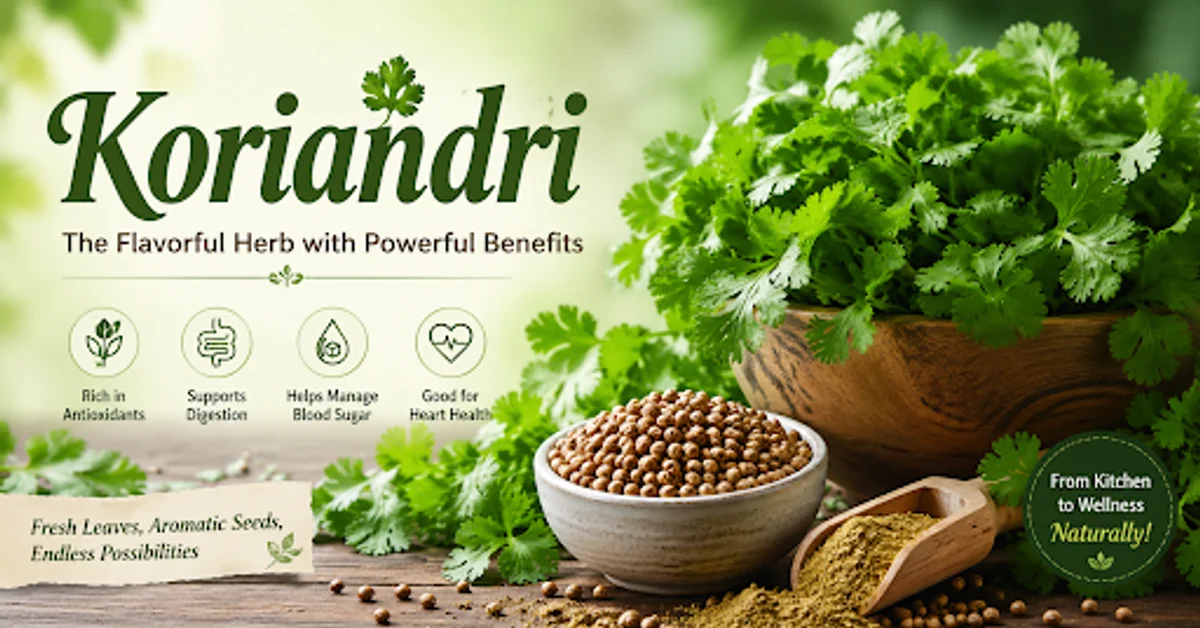
Koriandri: Health Benefits and Culinary Uses
Koriandri is the familiar culinary herb Coriandrum sativum, a member of the Apiaceae family. In everyday cooking, people usually mean the tender green leaves when they say cilantro, and the dried seeds when they say coriander. The plant is valued because nearly every part is useful: the leaves add brightness, the seeds add warmth, and the essential oil carries the herb’s unmistakable aroma.
Its flavor is one reason it stands out. Fresh Koriandri leaves taste light, citrusy, and vivid, while the seeds are warmer, nuttier, and more spice-like. That contrast makes Koriandri one of the most flexible kitchen herbs in the world. It works as a fresh finish, a cooked spice, and a bridge between simple home meals and bold regional dishes.
Koriandri is popular because it fits many food cultures without losing its identity. It appears in Indian curries and chutneys, Mexican salsa and guacamole, Thai soups and stir-fries, Peruvian sauces and ceviche-style dishes, and Mediterranean herb blends. That reach makes it both a home-kitchen staple and a professional chef’s favorite.
It is also practical. Fresh Koriandri can lift flavor without adding much salt, while ground seeds can deepen a dish without overpowering it. That makes Koriandri especially useful in healthy cooking, where bold taste matters and balance matters even more.
RELATED: Gelboodu: Origin, Popularity, and Online Culture
History and Origin of Koriandri
Ancient Uses in Different Cultures
Koriandri has an old and respected history. Britannica notes that coriander has records of use reaching back thousands of years, and modern review literature shows that it has long been valued in both culinary and traditional medicine settings. Across generations, people have used it for taste, scent, and household wellness rituals.
That long history matters because it explains why Koriandri appears in so many food traditions today. It did not become popular by accident; it stayed popular because people kept finding uses for it. From seasoning breads and stews to finishing salads and sauces, Koriandri has remained relevant by being simple, useful, and memorable.
Koriandri in Traditional Medicine
Traditional medicine systems have also made room for Koriandri. A review on coriander notes its long use in folk and traditional medicine, and a herbal medicine resource reports that in Ayurveda and Traditional Chinese Medicine, the seeds are used as a digestive, carminative, or stomach-soothing herb. That does not make it a cure-all, but it does show strong historical trust.
In practical terms, this means Koriandri has often been used after meals, in herbal infusions, or as part of spice blends meant to feel light and comforting. Its tradition is as much about daily support as it is about special remedies, which is one reason it still appears in both kitchen and wellness conversations.
Koriandri vs Coriander vs Cilantro
Key Differences Explained
These names confuse, but the idea is simple. Koriandri, coriander, and cilantro all refer to the same plant family and species, Coriandrum sativum. The difference is mostly about region and which part of the plant you are talking about. In North American usage, cilantro usually means the leaves, while coriander usually means the seeds.
That difference matters in cooking. Cilantro leaves are bright and fresh, so they are best added near the end of cooking or used raw. Coriander seeds are warmer and more aromatic, so they are often toasted, ground, or simmered longer in spice blends. The same plant, two very different roles.
Regional Names Around the World
The naming pattern changes by country. In the United States, cilantro is the common word for the fresh leaves. In the United Kingdom and much of Europe, coriander often covers both leaves and seeds. In South Asia, dhania is widely used. These regional labels do not change the plant; they simply reflect local food language.
That is why you may see Koriandri described in different ways across recipes and product labels. A cook in India may think of dhania chutney, while a cook in Mexico may think of cilantro on tacos or salsa verde. The plant stays the same, but the kitchen context changes the name.
Nutritional Profile of Koriandri
Vitamins and Minerals
Koriandri leaves are light in calories but rich in useful nutrients. USDA-based nutrition references show that raw cilantro leaves provide vitamin K and also contribute vitamins A and C, along with folate, potassium, and manganese. That makes fresh Koriandri a strong example of a small ingredient with a big nutritional role.
The seeds are different. Coriander seeds are more concentrated in aroma and spice compounds, so they are used in smaller amounts but add major flavor. They are not a leafy green substitute, but they are an excellent pantry spice for rounding out savory food. Together, the leaves and seeds make Koriandri unusually versatile.
Important Antioxidants and Phytochemicals
Koriandri contains antioxidants and polyphenols that have drawn research interest. Review literature describes coriander as a source of bioactive compounds, including linalool and other volatile molecules found in the essential oil. These compounds help explain the herb’s fragrance and much of the scientific interest surrounding its potential health properties.
That does not mean Koriandri is magic. It does mean the herb is chemically active in a meaningful way. Its aromatic compounds, especially in the seeds and essential oil, are linked in the literature to antioxidant, antimicrobial, and anti-inflammatory activity, which is why researchers continue to study it as both food and functional plant material.
Health Benefits of Koriandri
Digestive and Metabolic Support
One of the best-known Koriandri benefits is digestive comfort. Review literature reports the traditional use of coriander for digestive problems such as indigestion, bloating, flatulence, and related stomach discomfort. That makes Koriandri a classic digestive-support herb in both folk practice and modern kitchen use.
There is also growing interest in its metabolic role. Coriander extracts and seeds have been studied for their possible support of healthy glucose metabolism and insulin sensitivity, though the strongest claims should still be treated carefully. The evidence is promising, but Koriandri should be seen as a supportive food, not a treatment.
Heart Health and Blood Sugar Regulation
Heart health is another area where coriander has attracted attention. Review literature describes potential cardiovascular benefits, including effects linked to blood pressure, cholesterol, and overall cardiometabolic support. These findings are encouraging, especially when Koriandri is part of a diet rich in vegetables, legumes, whole grains, and healthy fats.
For blood sugar regulation, the science is still developing, but the direction is interesting. Some recent studies and reviews point to improved glycemic markers and oxidative stress profiles with coriander seed use, while broader reviews suggest possible benefit in metabolic syndrome and insulin resistance. That is enough to justify interest, but not enough to replace medical care.
Anti-inflammatory and Antimicrobial Effects
Koriandri also stands out for its antioxidant properties. The essential oil and leaf extracts have been studied for antimicrobial and anti-biofilm activity, and linalool is often highlighted as a major compound of interest. In simple terms, the plant may help defend against oxidative stress in lab settings and may influence microbial growth.
This is why Koriandri often appears in conversations about anti-inflammatory herbs and antimicrobial herbs. Still, it is important to keep the claims grounded: the research is real, but many findings come from review papers, laboratory work, or early-stage studies. That makes Koriandri exciting, but not miraculous.
Culinary Uses of Koriandri
Fresh Leaves in Everyday Cooking
Fresh Koriandri leaves are one of the easiest ways to add life to a dish. They work beautifully as a natural flavor enhancer in salads, soups, salsas, rice bowls, noodle dishes, and vegetable plates. Because the leaves are delicate, they usually taste best when added at the end of cooking or sprinkled on just before serving.
This is why Koriandri is so common in Indian, Mexican, Thai, Mediterranean, and South American cooking. It pairs especially well with citrus, garlic, chili, cumin, and onion. That flexibility gives chefs and home cooks a reliable way to make food taste brighter without making it heavier.
Uses of Koriandri Seeds and Powder
Koriandri seeds and Koriandri powder play different roles. The seeds are often toasted first, which deepens their fragrance, and then ground into spice mixes. They are a key part of Garam Masala and many curry powders, where they help create a warm, balanced base.
Ground coriander also fits well into pickles, marinades, lentil dishes, roasted vegetables, and spice rubs. Its warm, nutty profile gives structure to food without the sharp green note of the leaves. That is why Koriandri recipes often use both forms: the leaves for freshness and the seeds for depth.
Popular Global Dishes Featuring Koriandri
In Mexico, Koriandri is a classic finishing herb for salsa verde, guacamole, bean dips, tacos, and enchiladas. In India, it appears in chutneys, rice dishes, and curries, while in Thailand, it brightens soups and stir-fries. In Peru, cilantro-style herbs are commonly used in dishes like ceviche and other fresh sauces.
The same idea works across the Mediterranean Region as well, where herbs are used to keep food aromatic and lively. Koriandri fits this style because it is fresh, adaptable, and easy to pair with vegetables, grains, and proteins. It is one of those rare herbs that can shift from rustic to elegant without effort.
Koriandri in Ayurveda and Natural Remedies
Ayurvedic Perspective on Koriandri
In Ayurveda, Koriandri is often described as supportive for digestion and balance. Traditional use highlights the seeds especially, since they are commonly associated with digestive comfort and gentle internal cooling. That makes Koriandri part of a long-standing system of herbal remedies rather than a modern trend.
People often use this tradition in practical, low-drama ways: a pinch of coriander powder in food, a mild tea, or a kitchen recipe built around fragrant seeds and fresh leaves. The point is not intensity; it is steady, everyday support. That fits the way Ayurveda often treats herbs—small, repeated, and purposeful.
Herbal Remedies and Detox Uses
Koriandri tea and Koriandri home remedies are popular because they feel simple and gentle. A light infusion of the leaves or seeds is often used after meals or when someone wants a soothing herbal drink. People may also connect Koriandri with detoxifying herbs, but it is wiser to treat that as traditional language rather than a proven medical detox effect.
Traditional Chinese Medicine also includes coriander seeds in digestive-focused use, which shows that different healing systems have noticed similar qualities in the herb. Across traditions, Koriandri is rarely presented as aggressive or heavy; it is usually valued for gentle support, aroma, and digestion-friendly use.
How to Grow Koriandri at Home
Best Soil, Climate, and Sunlight
Koriandri cultivation is beginner-friendly. University extension guidance says cilantro grows best in well-drained soil with full sun, though light shade is helpful in warmer weather. The plant can also grow in containers, which makes it a good choice for patios, balconies, and small gardens.
The key is to keep the plant cool enough to stay leafy. In hot weather, coriander tends to bolt, meaning it quickly flowers and goes to seed. For leaf harvest, direct sowing and succession planting usually work better than transplanting, since the plant has a taproot and dislikes being moved around too much.
Watering, Harvesting, and Storage Tips
Water regularly while the plant is establishing, then avoid overdoing it. For leaf harvest, the foliage is often ready in about 45 to 80 days, and repeated picking can encourage fresh growth if the plant stays healthy. If the goal is seed harvest, allow the plant to mature longer until the seed heads dry and turn brown.
A simple home-growing approach works well: sow seeds directly, thin the seedlings, give them light, and keep the soil evenly moist. If you enjoy fresh herbs often, small batches planted every few weeks can give you a steadier supply of fresh Koriandri leaves.
Side Effects and Precautions of Koriandri
Allergies and Sensitivities
Most people tolerate Koriandri well, but a small number of people can have allergies or sensitivities. Reports of cilantro allergy include itching, hives, mouth irritation, cough, stomach upset, and, in rare cases, more serious reactions. The soapy taste some people notice is different from allergy and is linked to genetics, not immune response.
The OR6A2 gene is often discussed in this context because it may help explain why cilantro tastes unpleasant to some people. That trait is about smell and flavor perception. It does not mean the herb is unsafe; it simply means people experience it differently.
Safe Consumption Guidelines
Koriandri is generally safe in normal food amounts. Caution becomes more important with concentrated products such as coriander essential oil or high-dose extracts, where skin irritation or other side effects can be more likely. Food use and medicinal-strength use are not the same thing.
When to slow down and be careful
If someone already knows they react to spices or herbs in the Apiaceae family, they should be more cautious with Koriandri. Also, anyone using supplements, extracts, or essential oil forms should treat them carefully and avoid self-medicating with large amounts. In everyday cooking, though, Koriandri remains a normal, widely used herb.
Best Ways to Store and Preserve Koriandri
Storing Fresh Leaves
Fresh Koriandri leaves are delicate, so storage matters. Extension guidance recommends keeping them in the refrigerator, often wrapped in a slightly damp paper towel or placed upright in water like a small bouquet. That helps the leaves stay fresh longer and reduces waste.
For the best flavor, use fresh leaves quickly. If the leaves start to wilt, you can still freeze them for later use, but the texture will change. That is why fresh Koriandri is usually best for finishing dishes, while stored coriander seeds are better for long-term pantry use.
Preserving Seeds and Powder
Dried coriander seeds and Koriandri powder should be kept in airtight containers in a cool, dark, dry place. This preserves aroma and slows flavor loss. Several extension sources also recommend labeling containers and using stored herbs within a sensible time window for best quality.
Best flavor habit
If possible, toast or grind seeds just before cooking. That small habit gives a bigger flavor payoff than pre-ground spice that has sat too long. For anyone serious about Koriandri recipes, freshness is the difference between good and great.
RELATED: Gelboodu: Origin, Popularity, and Online Culture
Frequently Asked Questions
Is Koriandri the same as coriander?
Yes. Koriandri is another way people refer to coriander, the plant Coriandrum sativum. In many places, coriander means the seeds, while cilantro means the leaves, but both come from the same plant.
Can Koriandri help with digestion?
Traditionally, yes, it has been used for that purpose. Review literature and traditional medicine sources describe coriander seeds as digestive and carminative, and modern research continues to explore those effects. It should be viewed as a supportive food, not a medical treatment.
Is Koriandri useful for blood sugar management?
Some studies suggest it may support healthy glucose metabolism and insulin sensitivity, especially in seed form, but the evidence is still developing. The safest view is that Koriandri can be part of a healthy diet, not a replacement for diabetes care.
What is the easiest way to store fresh Koriandri?
Keep the leaves cool and slightly moist in the refrigerator, or place the stems in water and cover loosely. For longer storage, freezing is possible, while seeds and powder should go into airtight containers away from heat and light.
Why does Koriandri taste like soap to some people?
That is usually a genetic taste issue, not a problem with the herb itself. Research points to olfactory receptor variation, including OR6A2, as one reason some people perceive cilantro as soapy.
Summary
Koriandri earns its place because it does many jobs well. It brightens food, supports a healthy kitchen pattern, and carries a strong cultural history across India, Mexico, Thailand, Peru, and the Mediterranean Region. It is also scientifically interesting because of compounds such as linalool, polyphenols, and other aromatic molecules that continue to attract research attention.
That mix of flavor, tradition, and science is rare. Koriandri is simple enough for daily cooking and interesting enough for serious study. Used well, it can make meals fresher, more aromatic, and more enjoyable without complicating the plate.