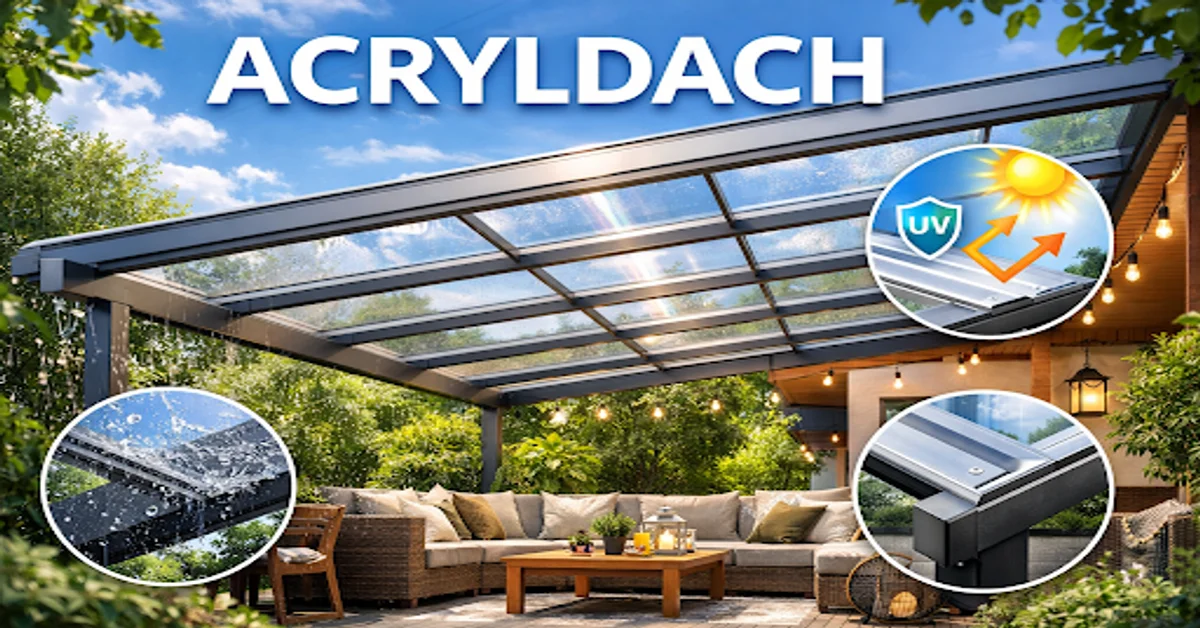
Acryldach: Brighten Your Patio with Acrylic Roofing
An Acryldach is a roofing system built from acrylic panels—commonly marketed as Plexiglass or PMMA (Polymethyl Methacrylate)—mounted on a supportive frame to create covered outdoor spaces that stay bright and protected. Unlike solid roofs that block daylight, an Acryldach allows light-transmitting roof panels to illuminate patios, terraces, and walkways while providing shelter from rain and wind.
Acrylic roofing has surged in popularity because it uniquely balances aesthetic appeal, functionality, and longevity. Homeowners and designers increasingly prefer transparent or tinted acrylic panels because they deliver sunlit outdoor spaces while resisting UV damage thanks to specialized UV protection coatings.
Modern architecture now treats patios, terraces, and garden lounges as essential living areas. An Acryldach helps convert these areas into usable outdoor living areas year-round. With the right architectural lighting design and comfortable furniture, a covered patio becomes a powerful extension of the home—bright by day and ambient by night.
Related: Tarnplanen: Best Camouflage Tarp Guide
How Acryldach Works
Understanding Acrylic Panels (Plexiglass / PMMA)
Acrylic panels, often called Plexiglass, are a synthetic polymer—PMMA—renowned for excellent optical clarity and high light transmission. Compared to polycarbonate, acrylic typically offers a clearer finish and smoother surface, which makes it ideal when crystal-clear visibility or refined aesthetics is desired.
Manufacturers often add UV protection coatings and anti-scratch layers to ensure long-term weather performance. These enhancements help maintain clarity and prevent yellowing, key features that contribute to the material’s appeal in transparent roofing materials applications.
Structural Components: Frames and Supports
An Acryldach is more than panels; it’s a system. The choice of frame—aluminum roofing frame, steel structural frame, or wooden roof support—affects durability, appearance, and cost. Aluminum frames are lightweight and corrosion-resistant, making them a popular choice for modern designs. Wooden supports offer a warm, natural look for traditional styles but may require more maintenance. For high-load or large spans, steel frames provide maximum strength.
The roof system also includes sealing and waterproofing systems, roofing fasteners and brackets, and careful attention to roof drainage slope design to ensure the system performs during storms and seasonal changes.
Light Transmission and Weather Protection
A key strength of an Acryldach is its ability to combine roof light transmission with robust weather protection. Clear or lightly tinted acrylic panels provide high daylight transmission, reducing the need for artificial lighting during the day. At the same time, the system prevents direct rain, reduces wind exposure, and—depending on finish—offers UV shading to protect furnishings and occupants.
Because acrylic is inherently weather-resistant, it’s often selected for applications where maintaining a bright, comfortable environment is a priority.
Key Advantages of Acryldach
Natural Light and Bright Outdoor Spaces
Acryldach panels create sunlit outdoor spaces that feel open and inviting. Whether you’re renovating a small patio or building a large terrace, acrylic roofing lets daylight into living areas, enhancing mood and visual connection to nature. This daylight optimization is great for plant health in garden lounges and greenhouses, and it creates a comfortable place to relax without exposure to harsh elements.
By filtering natural light instead of blocking it, the Acryldach supports activities that benefit from daylight—reading, dining, or gardening—while reducing reliance on daytime electric lighting.
Weather Protection: Rain, Wind, and UV Resistance
A well-installed Acryldach delivers excellent weather protection for roofing. Corrugated acrylic sheets or flat acrylic sheets, combined with proper seals and slope design, channel rainwater away and reduce wind-driven rain infiltration. Modern acrylic panels often include UV protection coatings that block harmful ultraviolet rays and reduce heat gain—helpful in protecting furniture, flooring, and plant life beneath the roof.
This balance of protection and transparency allows homeowners to use their outdoor spaces more consistently, from impromptu parties to quiet rainy-day retreats.
Durability and Impact Resistance
Acrylic has a strong impact resistance rating compared to glass. While polycarbonate may be more impact-resistant in some situations, acrylic’s superior optical clarity and scratch resistance (when coated) make it ideal where appearance matters. Acrylic roofing panels resist cracking under normal loads and provide a safer alternative to fragile glass, especially in family-friendly outdoor environments.
When paired with corrosion-resistant frames like aluminum, an Acryldach becomes a durable, low-maintenance investment.
Lightweight and Easy Installation
Because acrylic is significantly lighter than glass, the supporting structure can be streamlined—saving on materials and labor. For homeowners, this translates to simpler installation and lower structural load requirements. The acrylic roof installation process is often quicker and more flexible, suitable for retrofitting existing patios or adding to new constructions.
DIY enthusiasts can tackle small projects like acrylic pergola roof panels, while professional installers are recommended for larger, engineered roofs.
Aesthetic Flexibility and Modern Design
Acryldach systems are available in clear, tinted, or textured acrylic finishes, enabling custom designs that align with contemporary or traditional homes. Roof curvature styles and panel formats create striking visual statements—from sleek, flat panels that suit minimal modern architecture to gently curved sheets that add sculptural flair.
Architects and homeowners often combine acrylic roofing with wooden beams or metal frames to achieve the perfect blend of warmth and modernity.
Types of Acryldach Panels and Materials
Clear Acrylic Panels
Clear acrylic panels offer maximum light transmission and the most transparent appearance. They’re ideal for homeowners who want the clearest possible view while maintaining protection. Clear panels are common in terraces, walkways, and entrance canopies where unobstructed sightlines are desired.
Because they reveal colors and textures vividly, clear panels are excellent for greenhouses and garden lounges where plant appearance matters.
Tinted and Textured Panels
Tinted acrylic panels reduce glare and solar heat gain, improving comfort during sunny afternoons. Tints range from subtle smoke to darker shades for more significant shading. Textured panels provide partial privacy and diffuse harsh sunlight—an excellent option for poolside lounges or spaces near neighbors.
Both tinted and textured options add design versatility and can help balance daylight with privacy concerns.
Corrugated vs Flat Panels
Corrugated roofing sheets are popular for larger spans because the corrugation adds structural rigidity and improves rainwater drainage. Corrugated panels are often used in carports and walkways where efficient water runoff is essential. Flat acrylic sheets deliver a clean, contemporary look and are common in modern terraces and pergolas.
Your choice depends on aesthetic goals, drainage needs, and structural constraints.
Frame Materials: Aluminum, Wood, and Steel
Aluminum roofing frames are lightweight, low-maintenance, and corrosion-resistant—ideal for coastal climates. Wooden roof supports offer warmth and organic appeal but require regular treatment to protect against the weather. Steel structural frames deliver maximum strength for large spans or high-load areas, though they may need anti-corrosion coatings.
Selecting the appropriate frame ensures longevity and aligns the roof with the home’s architectural style.
Common Applications of Acryldach in Residential Spaces
Patios and Terraces
Patios and terraces are the most common applications for an Acryldach. These covered areas become functional outdoor living spaces—perfect for al fresco dining, quiet mornings, or entertaining. An acrylic patio roof keeps sunlight pouring in while sheltering furniture and guests from sudden showers.
With Acryldach, a terrace can be used comfortably across seasons, delivering exceptional return on investment for added living space.
Pergolas and Garden Lounges
For gardeners and outdoor entertainers, an Acryldach over pergolas or garden lounges makes these areas usable and pleasant. Acrylic’s light transmission supports plant growth while creating a shaded retreat for people. Combine with outdoor ambiance lighting to make the space cozy after dusk.
Pergolas fitted with acrylic panels blend natural and constructed elements in a way that feels open yet sheltered.
Carports and Entrance Canopies
An Acryldach above driveways or entrances protects vehicles and keeps entryways dry without creating a closed, dark environment. Entrance canopy roofing with acrylic panels enhances curb appeal while keeping the path clear and bright. Additionally, using corrosion-resistant frames like aluminum ensures low maintenance and long life.
This approach pairs function with refined aesthetic value.
Greenhouses and Walkways
Acrylic panels are excellent for greenhouses because they transmit light while providing weather protection. Walkway covers benefit similarly—creating crisp, safe pathways that are both sheltered and luminous. These installations demonstrate how acrylic roofing supports both plants and people equally well.
Design Ideas and Styles
Roof Shapes: Flat, Sloped, and Curved Panels
Experimenting with roof curvature styles can dramatically alter the visual impact of an Acryldach. Flat designs emphasize minimalism and modern simplicity. Gently sloped roofs enhance drainage and create a classic silhouette. Curved panels add sculptural elegance, ideal for standout terraces or designer pergolas.
Each shape serves specific functional needs—curves improve drainage and aesthetics, slopes guide water efficiently, and flat roofs deliver a clean, modern finish.
Combining Acrylic Panels with Wood or Metal Frames
Mixing materials is a popular strategy to achieve a balanced aesthetic. Pair flat acrylic sheets with a wooden roof support for a warm, rustic look. Or use a sleek aluminum roofing frame with tinted acrylic panels for contemporary curb appeal. These combinations allow homeowners to match their outdoor roofing to the overall design language of the property.
Smart material combinations enhance both durability and visual harmony.
Lighting and Accessories for Outdoor Ambiance
Illuminating the area beneath an Acryldach with architectural lighting design transforms it into a magical evening space. Integrated LED strips, suspended pendant lamps, or recessed fixtures create layers of light that complement daylight during evening hours. Add retractable shades, ceiling fans, or heating elements to maximize year-round comfort.
Accessories turn an Acryldach from a practical shelter into an emotional, inviting retreat.
Modern vs Traditional Outdoor Architecture
Acryldach adapts to diverse architectural contexts. In modern homes, frameless or minimal aluminum frames emphasize clean lines. In traditional homes, wooden frames and textured acrylic finishes accentuate warmth and heritage. Designers often use acrylic roofing as a unifying element to bridge new additions with existing structures.
The versatility of acrylic ensures it can support any architectural vision.
Installation Considerations
Site Assessment and Roof Slope
Before installing an Acryldach, conduct a thorough site assessment. Accurate measurements determine material needs and ensure correct alignment. Determining the roof drainage slope design is essential; an insufficient slope can cause pooling and leakage, whereas a properly angled roof channels water away efficiently.
Good planning prevents costly adjustments and helps maintain the roof’s long-term performance.
Professional Installation vs DIY
While small-scale projects like DIY acrylic roofing can work for experienced hobbyists, larger installations benefit from professional expertise. Certified installers understand structural engineering for roofing, proper sealing methods, and the need for expansion gaps to accommodate thermal movement.
Hiring pros ensures compliance with building codes and can help secure warranties.
Building Permits and Local Regulations
Local regulations sometimes require building permits for roofing installation—especially for sizable or structural additions. Check local codes and, if needed, obtain permits before construction begins. Working with a licensed contractor helps streamline the permitting process and ensures that your Acryldach meets safety and zoning standards.
Failing to secure permits can create legal and resale complications.
Expansion and Contraction of Acrylic Panels
Acrylic expands and contracts with temperature shifts. Correct fastening—using the right roofing fasteners and brackets and allowing expansion gaps—prevents buckling, cracking, or seal failure. Professional install teams account for these thermal dynamics, preserving the roof’s structural integrity over time.
Proper attention to these details ensures long-term reliability.
Maintenance and Cleaning Tips
Regular Cleaning Techniques
Routine cleaning preserves clarity and prevents buildup. Use mild soap and water with soft cloths or sponges, following recommended roof cleaning techniques. Avoid abrasive cleaners or high-pressure washers that could scratch the surface. Gentle maintenance ensures light transmission remains high and the Acryldach continues to look new.
A small effort every few months goes a long way.
Avoiding Scratches and Surface Damage
To keep scratch-resistant surfaces effective, steer clear of harsh brushes or rough tools. If minor scratches occur, some can be buffed out using the special polish recommended by the panel manufacturer. Protective coatings and proper cleaning protocols minimize long-term surface wear.
Careful handling during cleaning and maintenance extends panel lifespan.
Inspecting Frames, Fasteners, and Seals
Perform routine roof inspection of frames, fasteners, and sealing and waterproofing systems to catch early signs of loosening or wear. Tighten brackets, replace worn seals, and check drainage points to avoid leaks and structural stress.
Timely repairs reduce the need for larger, costlier fixes later.
Ensuring Longevity of the Acryldach Roof
Combining gentle cleaning, scheduled inspections, and prompt repairs helps ensure long-term weather performance. Maintaining an Acryldach protects your investment and keeps outdoor spaces comfortable for years.
Comparison with Other Roofing Materials
Acrylic vs Glass
Glass roofing offers exceptional clarity but is heavy and prone to shattering. Acrylic rivals glass in optical performance while offering impact-resistant advantages and far lighter weight—allowing sleeker frame designs. For family spaces or areas with potential impact hazards, acrylic often stands out as the safer, more practical choice.
Acrylic vs Polycarbonate Panels
Polycarbonate roofing provides superior impact resistance but typically has slightly lower clarity and can look less refined. Acrylic delivers excellent optical properties and a smoother finish. The right choice depends on whether optical clarity or maximum impact resistance is the priority.
Acrylic vs Metal Roofing
Metal roof sheets are extremely durable but block natural light completely. If you want bright, airy outdoor spaces, acrylic or transparent roofing materials are the preferred solution. Metals excel in durability, while acrylic excels in daylighting and ambiance.
Key Differences in Light Transmission, Weight, and Durability
Acrylic offers high light transmission, lightweight construction, and solid durability. Glass offers supreme clarity, but at a weight and fragility cost. Polycarbonate offers high impact resistance but slightly less clarity. Understand your priorities—clarity, strength, or longevity—before deciding.
Cost and Long-Term Value
Factors Affecting Acrylic Roofing Cost
Costs vary based on panel thickness and finish, frame material (aluminum vs wood vs steel), roof complexity, and additional features like lighting or custom curvature. Labor costs and local permitting fees also play a role. Corrugated acrylic sheets for simple carports will cost less than large custom curved terraces with architectural lighting.
Benefits of Investing in an Acryldach
An Acryldach adds energy-efficient outdoor roofing benefits by reducing the need for daytime lighting and extending the usability of outdoor spaces. The home value boost from added functional square footage and attractive outdoor amenities often offsets initial investment over time.
Increasing Usable Outdoor Space and Property Value
By making patios and terraces usable year-round, an Acryldach effectively expands living space—one of the top factors buyers consider. This enhanced outdoor comfort and beautiful, modern design can significantly increase both enjoyment and resale appeal.
Related: Asbestlint: History, Risks, and Safe Industrial Use
Frequently Asked Questions
How long does acrylic roofing last?
With proper maintenance, acrylic panels can last many years—often 15–30 years depending on UV exposure, panel quality, and frame durability. UV protection coatings and routine inspections extend longevity.
Can an Acryldach be installed on an existing patio?
Yes. Many homeowners retrofit existing patios with an Acryldach, though site assessment and structural checks are recommended to ensure proper support and drainage.
Does acrylic roofing require special cleaning products?
No special products are necessary. Mild soap, water, and a soft cloth are generally sufficient. Avoid harsh abrasives or strong solvents.
Is acrylic roofing stronger than glass?
Acrylic is more impact-resistant and lighter than glass, making it less likely to shatter. However, specific strength comparisons depend on panel thickness and manufacturing methods.
What are the best design options for an outdoor Acryldach?
Best options depend on goals: clear flat panels for maximum daylight, tinted panels for glare control, corrugated sheets for drainage, and curved panels for dramatic modern design. Pair panels with aluminum or wood frames to match your home’s style.
Summary
An Acryldach delivers a compelling mix of transparency, protection, and contemporary style. It brightens outdoor spaces, protects from weather, and adapts to diverse design visions—making it an exceptional choice for patios, pergolas, carports, and greenhouses.
If you want a stunning, functional, and low-maintenance roof that elevates your outdoor lifestyle, acrylic roofing is a proven, flexible solution. It blends daylight optimization, weather protection, and design versatility in one modern package.
Ready to transform your outdoor living? Consult a licensed installer to evaluate your space, discuss acrylic roof installation options, and explore Acryldach design ideas that match your home and budget. A well-chosen Acryldach can create countless memorable moments—sunlit mornings, sheltered evenings, and effortless entertaining—right outside your door.